By Madeleine Crabtree
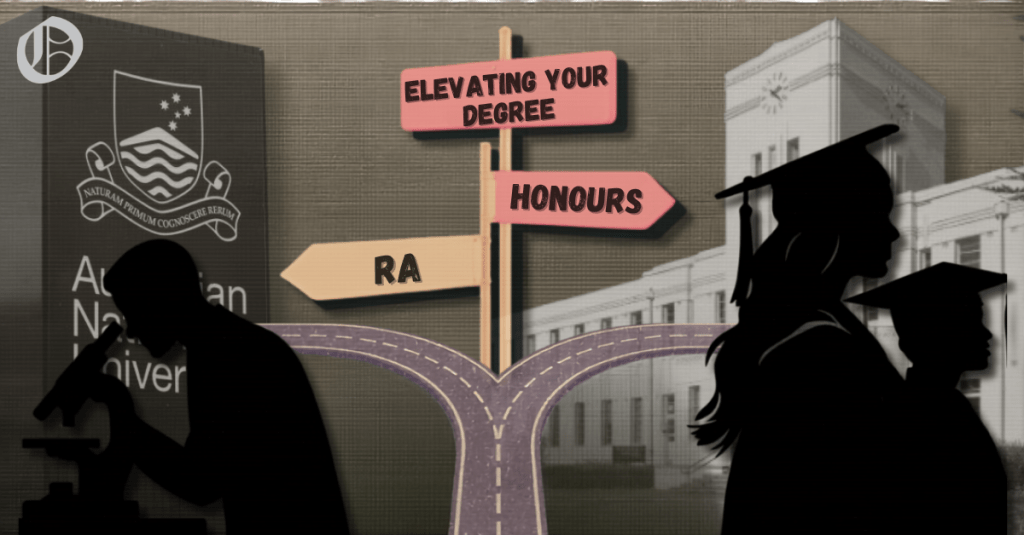
Have you ever wanted to dive deeper into your degree but not quite sure how? Are you apprehensive you are not making the most of your degree and the opportunities? Not to fear, Observer has looked into it so you don’t have to! We contacted research assistants and honours students at the ANU to hear about their experiences and advice on how you can make the most of your degree.
Starting with being a research assistant, those students who have worked such jobs can confirm it provides many benefits and incredible opportunities. Angus Smith, currently a research assistant at the National Security College (NSC) spoke to Observer about his ongoing time as a research assistant, which he described as an “underrated position in the corporate and policy world”.
Research, communication, and time management skills are but a few of the many he suggested students could gain from such positions. He expressed the skills learnt are applicable not just to careers in academia but also for broader roles, such as in government and policy departments.
Smith also emphasised the extent to which research assistant positions “can open a lot of doors” for students, using his own example of being published in the ANU’s NSC ‘No worries?’ report.
He labelled his involvement a “once-in-a-lifetime opportunity”.
It can also be a fantastic way to meet people, with Smith describing how research assistants can have the opportunity to work with “fantastic academics who are really pioneering different areas of research”. He described how this gifts students the opportunity to “see beyond the classroom into the academic world”.
If this sounds like a role right up your alley, how do you find such positions?
Smith personally gained his position through word of mouth. However, he advised that roles can also “really commonly [be] found around your academics” or through the ANU Careers site.
For students interested in putting themselves forward to be a research assistant, he suggested engaging and having discussions with lecturers interested in the same areas as you. Though Smith acknowledged this does not always lead immediately to a paid role, he also added “if you prove yourself normally it can move further from there”.
The opportunities for career progression are especially relevant in the case of policy teams. “They always need junior staff who are preferably students or early career professionals who are looking for work experience in the subject matter they are interested in,” Smith advised.
Working as a research assistant is a significant commitment. How do current research assistants effectively manage their schedule of work, university and other commitments?
For Smith, he describes having an “unconventional schedule” in which he works as a research assistant three days a week and studies two days. Though “the workload is full on”, he has found his role provides “a lot of flexibility,” especially as research assistants are normally working within the university sector, with academics who understand your schedule.
Smith added that being a research assistant can make managing your academics easier. Skills such as time management and critical thinking, all fostered within the workforce, can then be applied to your studies.
To sum up, in Smith’s experience such roles “are good for students because they are on-campus, they are flexible hours […] and you just work as you are needed”.
But research assistant positions are not the only way to take your degree further.
Students can also enhance their degrees by undertaking an Honours program. This is typically an additional full-time year of study that is a continuation of an undergraduate degree. Observer spoke to current and former Honours students to gauge more about their experience.
When asked why they decided to undertake Honours as part of their degree, most answered that it was their way of seeing if they wanted to pursue academia or further study (like a PhD).
One student thought it “would be the perfect way to test my interest and passion for these sorts of work and what they involve”. Another said they felt that their “technical skillset was still lacking after only undergraduate coursework” and thought Honours could help them develop data analysis and scientific writing skills.
Many also gave the reason they were not yet confident in what they wanted to pursue for professional work, and that “the chance to work on a project that I was highly passionate about and interested in” was incredibly appealing.
Observer asked students about the benefits of an Honours degree.
“You get a taste of what research is like,” one student answered. “You learn heaps of new skills, for example technical skills in lab work or data analysis, writing skills, and especially learning to work independently.”
This was backed by another student, who felt they had “massive improvements in self-motivation and the ability to work with only guidance,” enabling them to develop the skills of independently-driven work and the ability to undertake large and long-term projects.
Students advised that it is also an excellent way to make connections with other students and researchers in your area of interest, which is really helpful in deciding what you want to do after your degree.
However, some students also pointed out some potential downsides, urging other students to consider when deciding whether to undertake a degree. One of these was that Honours students usually do not get breaks during the semester, although this may depend on the project or supervisor.
Additionally, though some employers highly value the completion of Honours as part of your degree, one student pointed out that a lot of the time it is only particularly valuable when you are wanting to pursue academia, or when trying to improve your grades for medicine.
Some concerns also arose among students over the application process, with one student labelling their experience “particularly inefficient”. This student was wanting to do an Honours specialisation offered by a different College to the degree they were enrolled in. Difficulties arose due to the restructuring of ANU Schools and Colleges in 20255. This resulted in them being officially enrolled in Honours almost a month after the official Honours start date.
As a result, this student advises other students to be “prepared for potential delays in enrolment, especially if your Honours is run by a different College to your degree”.
They warn students to ensure they “get written approval from the conveners of your majors and minors that you have met the course requirements,” which needs to be forwarded directly to the College with your Honours application.
Another student recommended chatting with someone from the School you would be interested in completing your Honours program with, including bringing along ideas for your project.
All students emphasised the importance of checking you meet the requirements and grades, as each Honours program has their own requirements.
Although students should keep in mind potential administrative difficulties and lack of payment for most work, the world of university is vaster than most undergrads might realise.
With opportunities for being a research assistant providing unique, hands-on experience, and Honours programs providing a chance for interest-led academic work, there might just be something more to unlock in your university experience.
Graphics by Nur Aisyah
Know something we don’t know? Email news@anuobserver.org or use our anonymous tip submission.
If you have an issue with this article, or a correction to make, you can contact us at news@anuobserver.org, submit a formal dispute, or angry react the Facebook post.
If you don’t have an issue with this article and want to hear more from us, we’re in the process of making a newsletter! Sign up here, and have the latest news delivered directly to you.
Want to get involved? You can write articles, photograph, livestream or do web support. We’re also looking for someone to yell “extra!” outside Davey Lodge at 1AM. Apply today!

