By Madeleine Crabtree
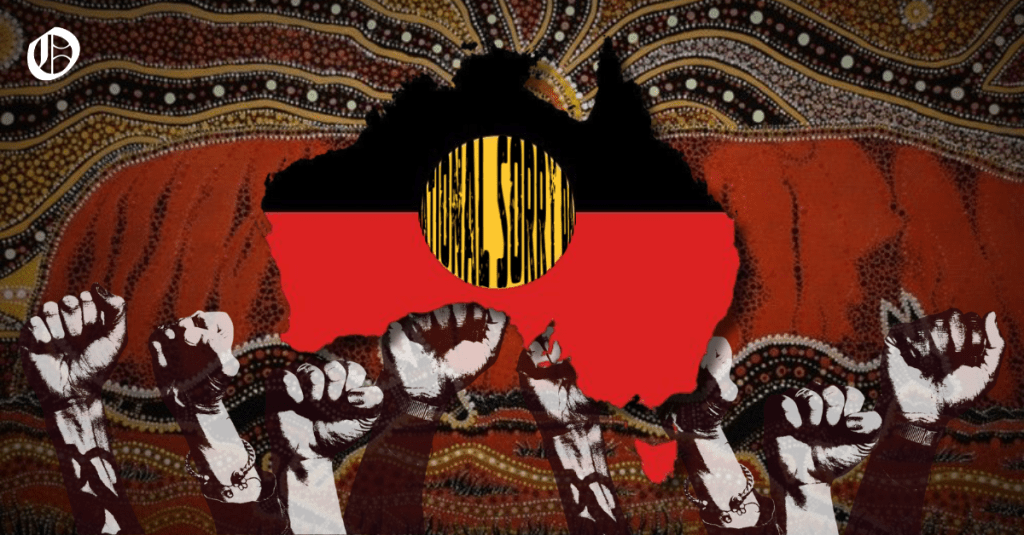
Tuesday 26 May 2026 marks the 29th observance of National Sorry Day, marked by the release of the landmark ‘Bringing Them Home’ report on 26 May, 1997. The day commemorates the Stolen Generations, acting as a step towards reconciliation between Indigenous and non-Indigenous Australians. Observer reached out to the ANU Indigenous Department to hear their thoughts on the day.
In a statement to Observer, Indigenous Department Officer Tom Hughes noted the importance of Sorry Day as an acknowledgement of the “historical injustice forced upon First Nations people”.
He stated that the removal of Indigenous children from their families and country “has been described as an act of genocide, and represents one of the darkest periods in our country’s history”.
When asked about the success of Sorry Day in fostering reconciliation across Australia, he noted that although it has established a date to recognise the truth of Australia’s history, one of its original aims was also to condemn the lack of action from the Australian Government in responding to the ‘Bringing Them Home’ report.
The report investigated the forced removal of Aboriginal and Torres Strait Islander children from their families. It included 83 individual recommendations, which spanned five core areas: acknowledgement and apology, guarantees against repetition, truth-telling, rehabilitation, and monetary compensation.
Despite this, only six percent of the recommendations have been implemented. Hughes calls for a push for the implementation of more recommendations, stating this is “paramount for the future of reconciliation in Australia”.
2026 also marks 18 years since Prime Minister Kevin Rudd issued the National Apology to the Stolen Generations in the Australian Parliament on 13 February 2008.
Hughes observed that since the Apology was issued, most improvement in the way First Nations peoples have been treated by the government has been symbolic. He added they have been treated as a “political football”.
Though he noted that the 2023 Voice to Parliament Referendum showed that the current Labor government was willing to try something different, the failure of the referendum has meant that the two other pillars of the Uluru Statement from the Heart, Treaty and Truth, are unlikely to be implemented.
Hughes remarked that there has not been a meaningful improvement in the way Aboriginal and Torres Strait Islander people are treated. Hughes gave the example of the Northern Territory Country Liberal Government lowering the age of criminal responsibility to ten and reintroducing spit-hoods in youth detention in 2024.
He labelled these actions as “racially charged policies blatantly aimed at keeping Aboriginal youth in jail”.
He also mentioned the NSW Labor Government’s Crown Land Management Amendment Bill, introduced in March 2026 without consultation with key stakeholders, including the NSW Aboriginal Land Council. He argued this bill “poses a serious threat to land rights in the state”.
“This lack of improvement and undermining of First Nations rights shows there is still a long way to go until First Nations people see a meaningful improvement in the way they are treated by the government.”
The ANU Indigenous Department will be running a number of events throughout Reconciliation Week. These include attending Yoorrook Justice Commissioner and proud Kerrupmara/Gunditjmara man Travis Lovett’s Walk for Truth on 26 and 27 May.
Hughes encouraged all ANU students to attend the walks, the details of which can be found here. The Walk for Truth calls for the Australian Government to establish a national truth-telling body, reflecting the core objectives of Sorry Day.
He noted that the walk on 27 May is “especially special as it is the final leg of the walk”. Lovett will lead the walk from Reconciliation Place to Parliament House, ending a month-long journey which started at the Victorian Parliament.
Hughes also offered advice for ANU students wanting to support and amplify Indigenous voices. He stated that simply learning the truth of Australia’s dark history “goes a long way in informing yourself but also allows you to understand matters that are sensitive to your First Nations friends and colleagues, and helps you amplify their voices”.
“Informing yourselves about the strength and resilience of Aboriginal and Torres Strait Islander people and the powerful figures throughout our 60,000 year long history will guide you in understanding our proud culture.”
He also reminded students to follow the Indigenous Department’s socials to catch up on their advocacy work throughout the year. For students wanting to get involved, the “newly established Indigenous Cultural Society provides a place for all students to come together to learn and celebrate Aboriginal and Torres Strait Islander culture”.
More to come.
Graphics by Anushkaa Ahuja
Know something we don’t know? Email news@anuobserver.org or use our anonymous tip submission.
If you have an issue with this article, or a correction to make, you can contact us at news@anuobserver.org, submit a formal dispute, or angry react the Facebook post.
If you don’t have an issue with this article and want to hear more from us, we’re in the process of making a newsletter! Sign up here, and have the latest news delivered directly to you.
Want to get involved? You can write articles, photograph, livestream or do web support. We’re also looking for someone to yell “extra!” outside Davey Lodge at 1AM. Apply today!

